Quick answer
Singapore’s 24-hour activity guidelines say children aged 7 to 13 need at least 9 hours of sleep a night. They also need an average of 60 minutes of active play a day. They also say to keep screens for fun as low as possible. No guideline caps tuition or enrichment; what they take from sleep and play is the thing to watch.
The useful number: Our example P3 week leaves 20 h 15 min of free time, about 2 h 54 min a day.
Who is this for?
Parents of children aged 3 to 12 who are wondering whether to add another class, or whether the week already has too much in it.
It looks at the week, not your child. It never says whether a child is doing well or badly.
What do Singapore’s guidelines say?
Singapore’s paediatricians and KKH published two sets of 24-hour activity guidelines. One is for ages 7 to 18, the other for early childhood.
- Sleep, ages 7 to 13
- At least 9 hours a night
- Sleep, ages 3 to 5
- 10 to 13 hours a day, naps included
- Sleep, age 6
- 9 to 11 hours a day
- Active play, ages 7 and up
- An average of 60 minutes a day of moderate-to-vigorous activity
- Active play, ages 3 to 6
- At least 180 minutes a day, 60 of them vigorous
- Screens for fun, ages 3 to 6
- Less than 1 hour a day
- Screens for fun, ages 7 and up
- As little as possible; 2 hours or more a day is linked to the most harm
The guidelines for older children say: “Have regular sleep of at least 9 hours (for 7-13 years old)”.
What does a typical P3 week look like?
Our example week is for a 9-year-old. School takes 7.5 hours a day with travel, plus 1.5 hours of homework. Each week there are 3 hours of tuition, 2 of enrichment and CCA.
- Sleep
- 67 h 30 min
- School and travel
- 37 h 30 min
- Homework
- 7 h 30 min
- CCA, tuition and enrichment
- 8 h 30 min
- Active play
- 7 h 45 min
- Screens for fun
- 9 h
- Family time
- 10 h
- Free time left
- 20 h 15 min
It meets 2 of 3 guidelines: sleep and active play, but not screens, because 2 hours on a weekend day is not below 2. Try your own week in the week balance planner.
Before you add another class
- Write down what the class would replace: sleep, play, family time or free time.
- Keep sleep and active play first. They are the parts of the week with a guideline.
- Ask your child which class they would keep if they could keep only one.
- Use our questions before adding a tuition class to check what the class is for.
- Try it for one term, then look back together.
What if the week already feels too full?
Signs to talk about include trouble sleeping, stomach aches before school or tests, and losing interest in things your child used to enjoy. HealthHub lists headaches, stomach pains and poor sleep as possible signs of exam stress.
Our worry and exam-nerves toolkit has scripts and breathing cards. It also lists where to get help: the form teacher, the school counsellor, your family doctor or a polyclinic.
What does this guide not tell you?
It cannot tell you how many classes are right for your child. The guidelines set no limit for school, tuition, enrichment or homework, so we do not set one either.
Printables for this guide
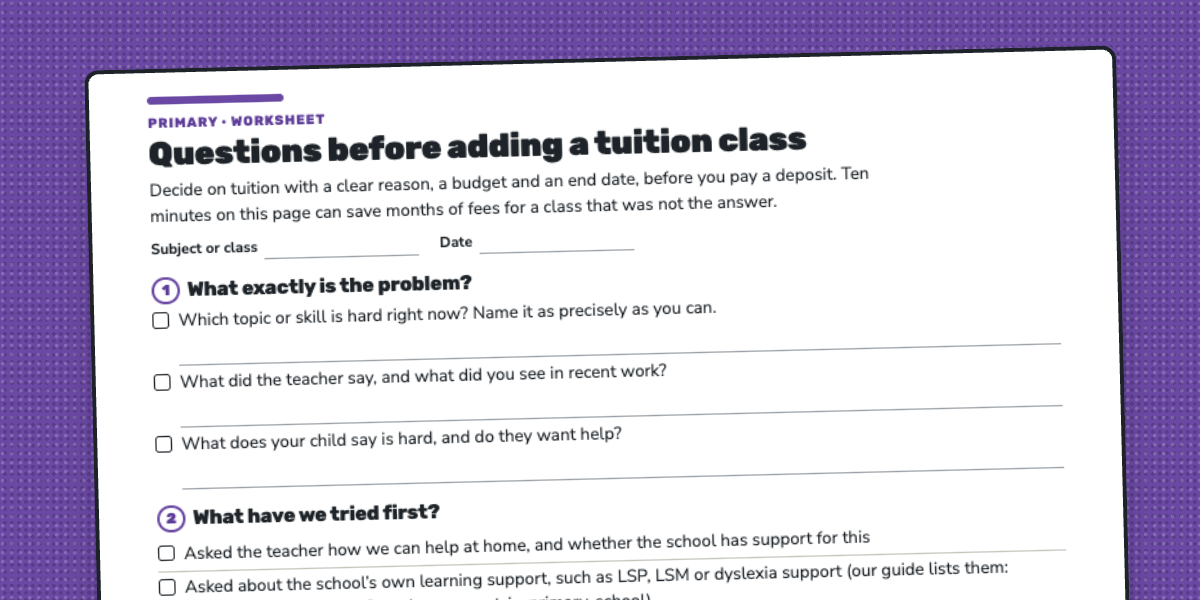
Questions before adding a tuition class
Set a reason, a budget and an end date before paying a tuition deposit. Name the problem, try free options, check the week and cost, and set a review date.
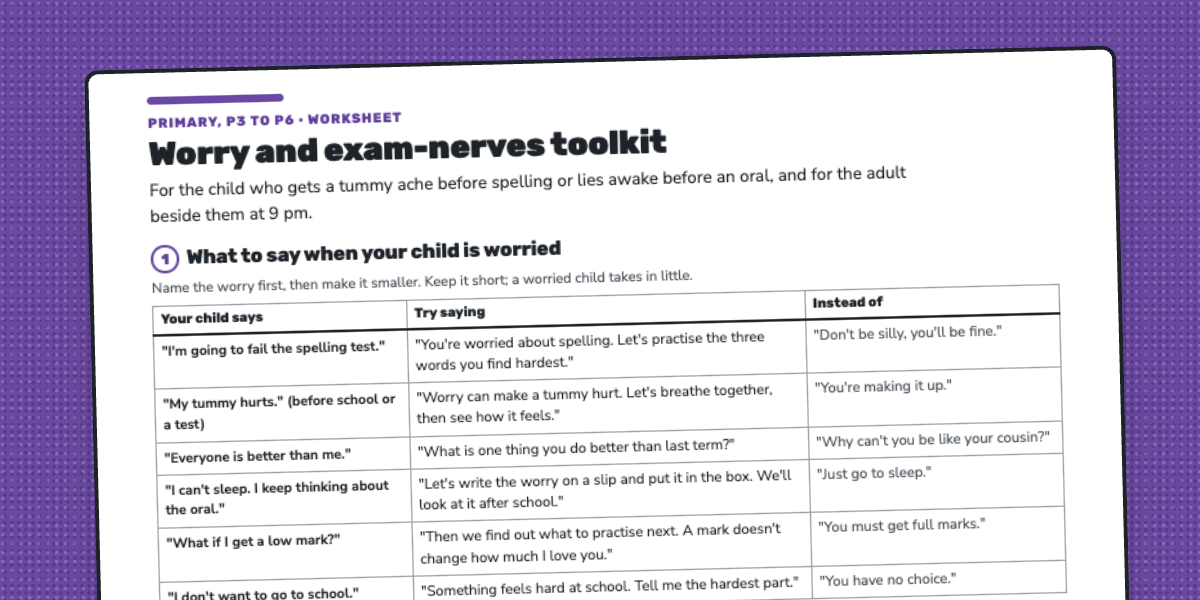
Worry and exam-nerves toolkit
For P3 to P6: what to say when your child is worried, breathing cards and worry slips. Plus an exam-week routine and where to get help.
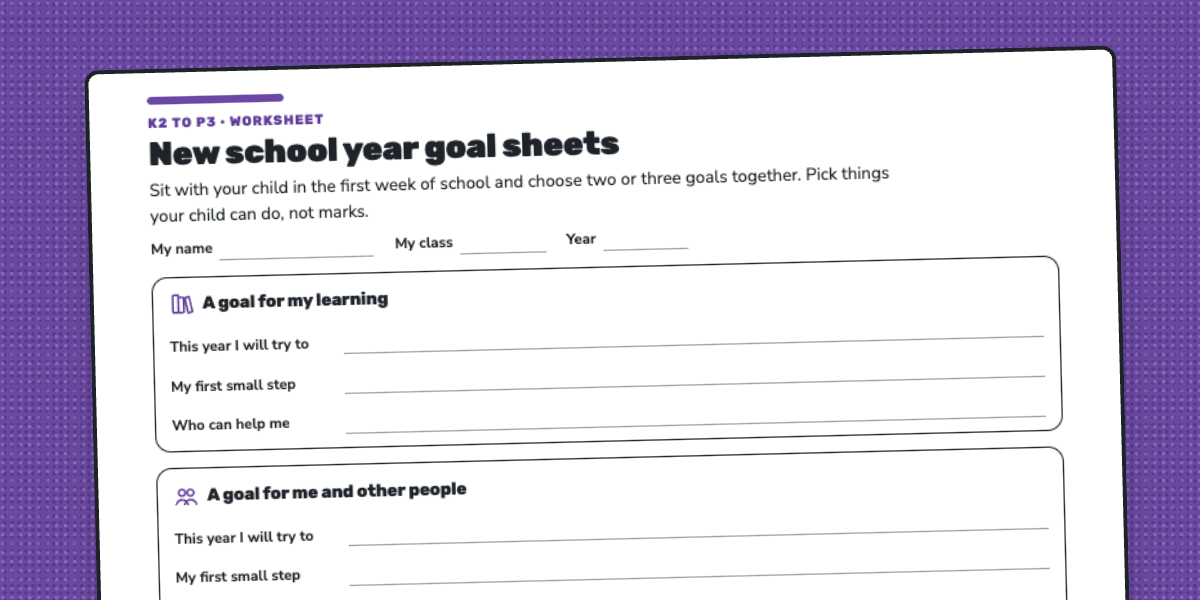
New school year goal sheets
Goal sheets for the 2027 school year. A picture sheet for K2 to P3, a planning sheet for P4 to P6, and a look-back each MOE term.
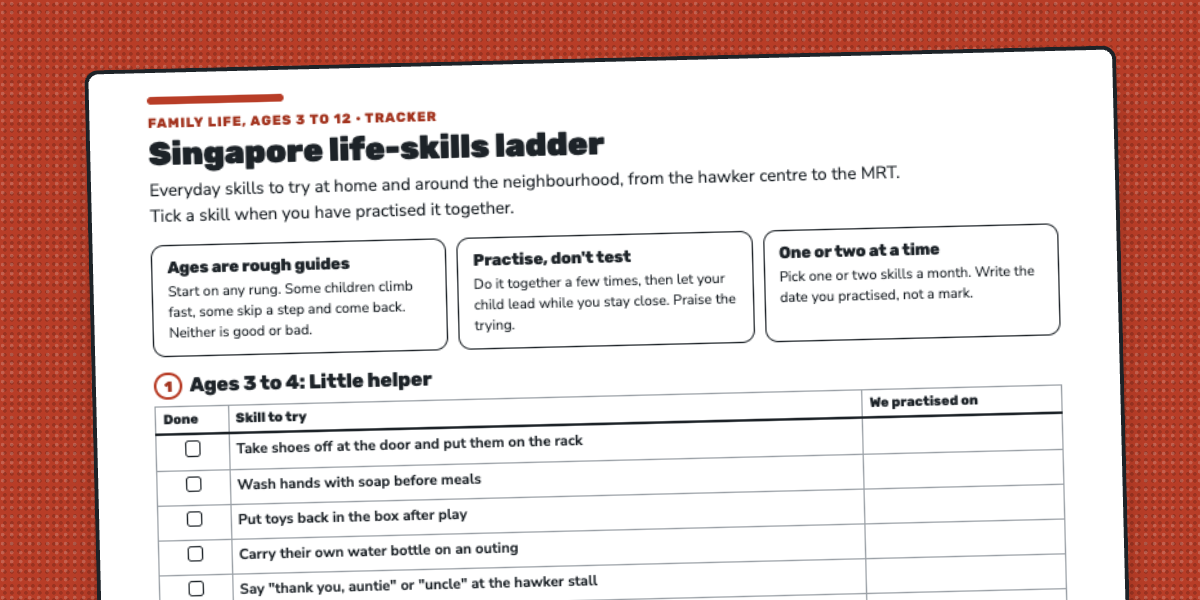
Singapore life-skills ladder
Everyday skills to try from age 3 to 12: hawker and canteen orders, the MRT and concession cards, packing a bag and simple cooking. Tick boxes, never scores.
Lay out your own week
Enter a typical school day, weekend day and the week’s classes. Everything stays on your phone.
Plan our week → Questions before adding a tuition class → Worry and exam-nerves toolkit →Frequently asked questions
How many hours of sleep does a primary school child need?
At least 9 hours a night for ages 7 to 13, the Singapore 24-hour activity guidelines say.
How much screen time is OK for a primary school child?
The guidelines say to limit screens for fun as much as possible. 2 hours or more a day is linked to the most negative health effects.
How much exercise does my child need?
An average of at least 60 minutes a day of moderate-to-vigorous activity for ages 7 and up. Preschoolers need 180 minutes a day of any activity.
How much tuition is too much?
No Singapore guideline sets a limit. Check what each class takes from sleep, active play and family time.
Keep this guide for the next big decision.
Build your own reading list and pick up where you left off with a free RaisingAngels account.
Free account · Tools stay free without an account.
Sources & assumptions
- Singapore Integrated 24-Hour Activity Guidelines for Children and Adolescents (summary, KKH) ↗
- Singapore Integrated 24-Hour Activity Guidelines for Early Childhood (summary, KKH) ↗
- HealthHub (HPB): Exam stress-busting tips ↗
The hours are your own estimates. Talk to your child’s teacher or your doctor if you are worried.